What is Fire-Rated Glass?
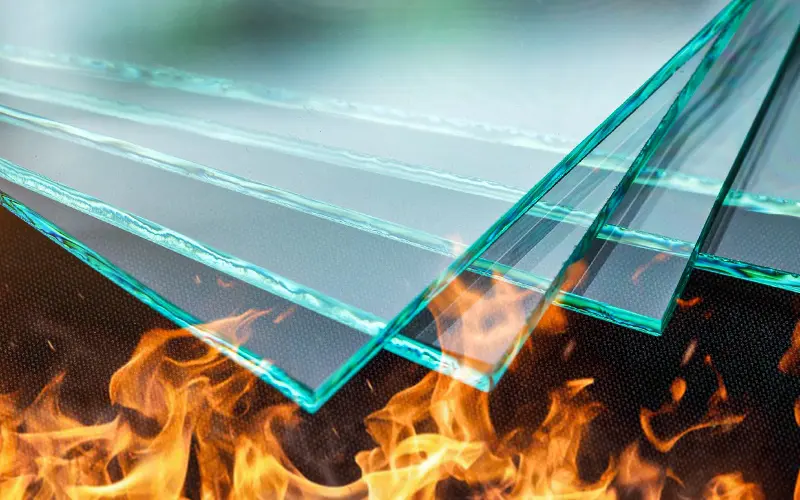
Fire-rated glass is designed to endure extreme temperatures while maintaining its structural integrity during a fire.
It undergoes rigorous testing to ensure it can contain flames and smoke within a specific area, a legally required protection measure known as fire compartmentation. This allows more time for safe evacuation, reduces destruction, and gives firefighters the ability to bring the fire under their control and extinguish it more effectively.
As a key component of building safety regulations, fire-rated glass is commonly used in fire doors, internal partitions, and other structures to enhance fire protection.
How Does Fire-Rated Glass Stop the Spread of Fire?
How fire-rated glass stops the spread of fire depends on the type of fire glass you choose or need:
- Integrity-rated glass (E) stops flames and gas from spreading by providing a physical glass barrier that resists thermal shock and doesn’t crack or shatter.
- Integrity and Insulation-rated glass (EI) maintains its integrity and also stops heat transfer using intumescent layers. When exposed to heat, these layers expand and can go opaque, forming an insulating barrier to slow heat transfer.
- Integrity and Radiation-rated glass (EW) maintains a physical barrier while also limiting radiated heat through reflective or absorbent coatings or interlayers that deflect or absorb radiant heat before it reaches the safe side.
What do Fire-Rated Glass Ratings Mean? (E, EI, 30/0, and 60/30 explained)
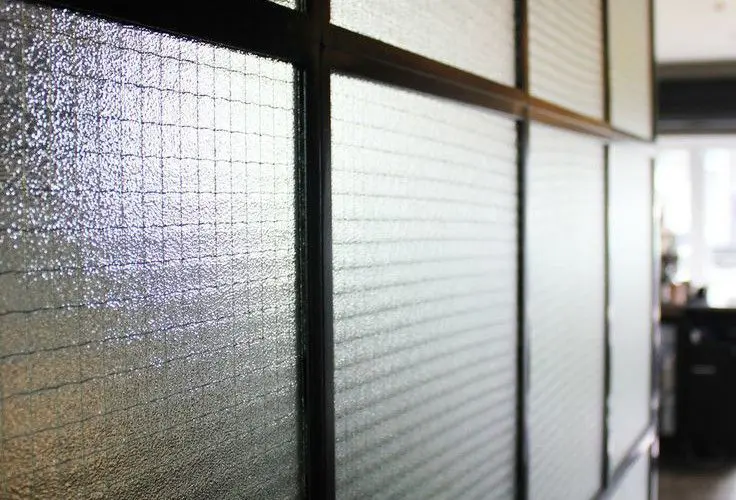
Fire glass comes in three main types, according to EN 13501-2 European letter-based classification systems, alongside wired glass:
- Integrity (E)
- Insulation (EI) ratings
- Integrity and Radiation (EW)
EW-rated and wired fire glasses aren’t commonly required in commercial or residential settings, with EI and E-rated classifications being specified most often.
The main difference between Integrity (E) and Insulation (EI) ratings is that Integrity (E) rated glass will ensure a continued barrier by remaining intact during a fire, preventing the passage of flames and hot gases for a specified time, such as 30 or 60 minutes.
Insulation (EI) ratings go a step further by limiting the transfer of heat through the glass, maintaining a lower temperature on the non-fire side as well as remaining sturdy in the face of flames and hot gases. This is critical in situations where preventing heat transfer is essential for protecting occupants as they evacuate or limiting damage to materials or stock on the safe side of the glazing.
Found in the fire-rated glass markings etched onto each product, fire-rated glass is also given an assigned number, usually 30, 60, 90, or 120, based on standardised tests that measure structural integrity and insulating properties, if relevant, to indicate the fire resistance level of the glass.
For example, with E30 or EI60-rated glass, the letter shows the type of fire glass and the number shows how long, in minutes, the glass can perform when under standardised fire testing. So, for E30-rated glass, the glass will prevent gas and flames from passing through for 30 minutes, while EI60 fire glass will prevent gas and fire passage and limit heat transfer for 60 minutes.
If you see 30/0 or 60/30 on glass products, the two numbers refer to minutes of Integrity protection and Insulation protection, respectively. So, 30/0 means 30 minutes of Integrity with no insulation – equivalent to an E30. A 60/30 notation means 60 minutes of Integrity, with 30 minutes of Insulation protection, making it an EI-rated glass.
What are the Benefits of Fire-Rated Glass?
- Combines fire safety while maintaining the flow of natural light and uninterrupted sightlines
- Regulatory compliance is maintained
- Building users are protected, escape routes are maintained, and potential damage is lessened thanks to the maintenance of compartmentation principles
- Acoustic insulation is increased, keeping spaces comfortable and usable
- Durability is improved as fire-resistant qualities are added
Fire-Rated Glass, Building Regulations, and Compliance
According to Approved Document B, if glazing forms part of a fire-resisting compartment wall, floor, or along protected escape routes, it is mandatory to use fire-rated glass. This includes domestic or commercial buildings.
Key example locations include:
- Protected stairways and corridors, including those that separate those from common corridors and stairwells
- In fire doors
- In compartment walls or floors
- On external walls close to the boundary or property line
- High-rise buildings
- Mixed-use buildings
- Doors between homes and garages
Failure to comply with the glazing requirements set out in the Building Regulations can lead to injuries, damage, building loss, and deaths, as well as fines, legal action, and building closure – so it’s really not worth the risk.
How Much Does Fire-Resistant Glass Cost?
The price of fire-rated glass depends on a range of different factors, so there is no standard price list. The cost will be determined by the:
- Type of fire-resistant glass, for example, E or EI-rated glass
- Dimensions (size and shape)
- Door or screen system
- Quantity of panels required
When you make your choices using the selection tool above, it will calculate a price inclusive of VAT according to the specifications you’re requesting.
Alternatively, if you need bespoke fire-rated glass, you can also get in touch with our team to request a custom quote. Call 020 8500 1188 or email [email protected] to get started.
Can I Use Fire-Rated Glass in Timber and Steel Frames?
Fire-rated glass can be installed in both timber and steel frames, provided the entire system (glass, frame, and sealant) is tested and certified for fire resistance.
Failure to ensure that the frame matches the specifications required can lead to devastating consequences, so it’s always worth bearing the whole structure in mind, rather than the glazing alone.
What is the Difference Between Fire-Rated, Fireproof, and Pyro Glass?
Generally speaking, fire-rated, fireproof, and Pyro glass are all the same product – a fire-resistant glass.
Pyro glass is a particular brand, and there is no such thing as truly fireproof glass; all fire-rated glass will eventually fail under prolonged heat and fire exposure.
Order Fire-Rated Glass for Your Next Project
As a trusted UK manufacturer of toughened glazing, fire glass from The Glass Warehouse is the tough, compliant, and trusted solution suitable for a range of commercial and domestic applications.
To order or ask for technical specifications, call us on 020 8500 1188 or email [email protected], and we’ll help however we can.