Juliet Balcony, Balconette, or Guarding: What’s the Difference (and Why It Matters)?
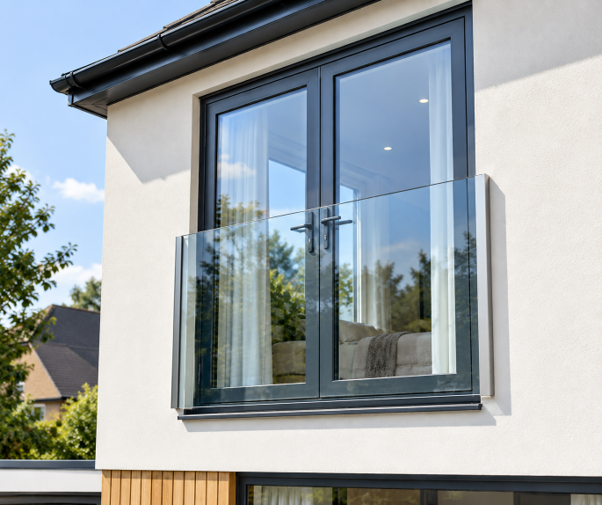
Start researching Juliet balconies and you’ll quickly find several different names for what appears to be the same product: Juliet balcony, Juliette balconette, French balcony, and Juliet guarding.
In most cases, these aren’t different products at all. They’re different names used to describe the same basic form of barrier.
Search our Juliet balcony range and you’ll see systems designed for this familiar application. However, one of these names – “guarding” – becomes particularly important once Building Regulations are involved.
So, what’s the difference between a Juliet balconette vs Juliet balcony, and does it actually matter what you call it?
The Many Names for the Same Product
“Juliet balcony” is the term most commonly used by homeowners, suppliers, and installers in the UK. You’ll also frequently see it written as “Juliette balcony”, which is simply an alternative spelling rather than a different product.
“Juliet balconette” is another name for essentially the same architectural feature. The word balconette literally suggests a smaller balcony and tends to appear in architectural descriptions and within the industry.
“French balcony” is another widely used term for the same style of barrier and is particularly associated with European architecture.
So, when comparing a French balcony vs Juliet balcony or balconette, you aren’t necessarily comparing three different products. In everyday use, the terms generally describe guarding installed across a full-height upper-floor opening without a projecting platform.
Why It’s Legally Called “Guarding”
This is where the terminology starts to matter.
In the context of UK Building Regulations, the important function isn’t the romantic or architectural name given to the product. It’s the fact that the system provides protection from falling.
That’s why regulatory guidance deals with these installations as barriers or guarding.
Our separate guide explains how it’s classified under Building Regulations in greater detail. Approved Document Part K sets out guidance relating to protection from falling, collision, and impact and specifically includes external balconies, including Juliet balconies, within its guidance for guarding.
In other words, “Juliet balcony” may be the term you search for when buying one, but “guarding” describes the safety function it performs.
This distinction also helps avoid confusing Building Regulations with planning. If that is relevant to your project, our separate guide to planning permission for a Juliet balcony explains the planning side without mixing the two processes together.
Not the Same as a Traditional Balcony
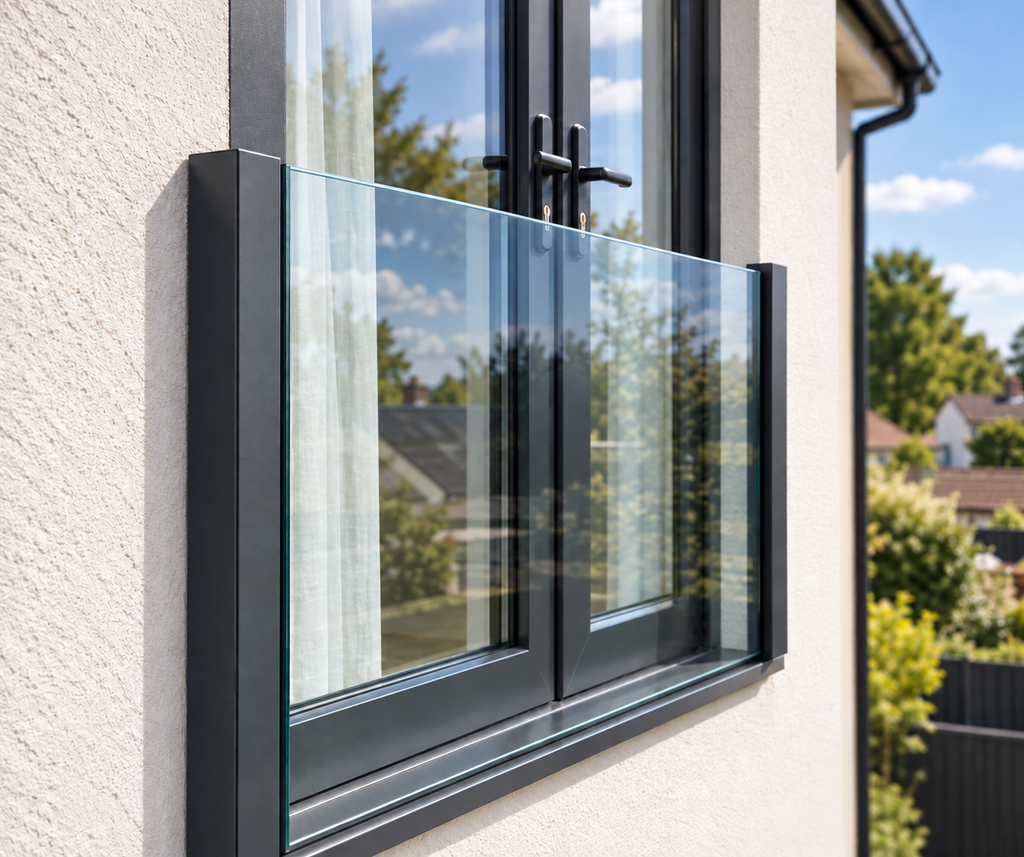
Whichever name is used – Juliet balcony, balconette, French balcony or guarding – it shouldn’t be confused with a traditional walkout balcony.
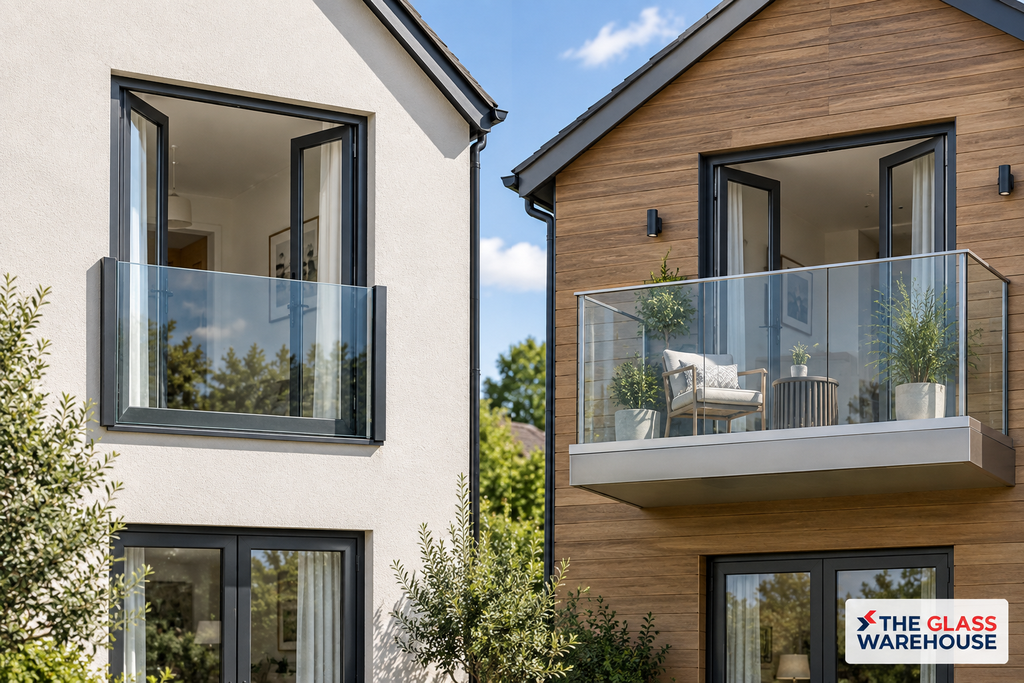
A traditional balcony includes a projecting platform that creates external floor space you can physically step onto. A Juliet balcony doesn’t.
That distinction matters because adding a structural platform changes the nature of the project considerably, introducing requirements and considerations that don’t apply in the same way to a simple guarding system across an opening.
If you’re deciding between the two for a property, our guide to Juliet balconies vs traditional balconies provides a full comparison of the options.
The Shakespeare Connection and How the Design Evolved
The name “Juliet balcony” is, of course, associated with Shakespeare’s Romeo and Juliet – but there’s an interesting detail behind the story.
The famous exchange between Romeo and Juliet is universally known as the “balcony scene”, yet Shakespeare’s original text doesn’t actually describe Juliet as standing on a balcony. The stage direction places her “above”, while Romeo famously refers to the light coming through a window.
The balcony became part of the enduring theatrical and cultural image of the scene, and the association with Juliet eventually became attached to the architectural feature we recognise today.
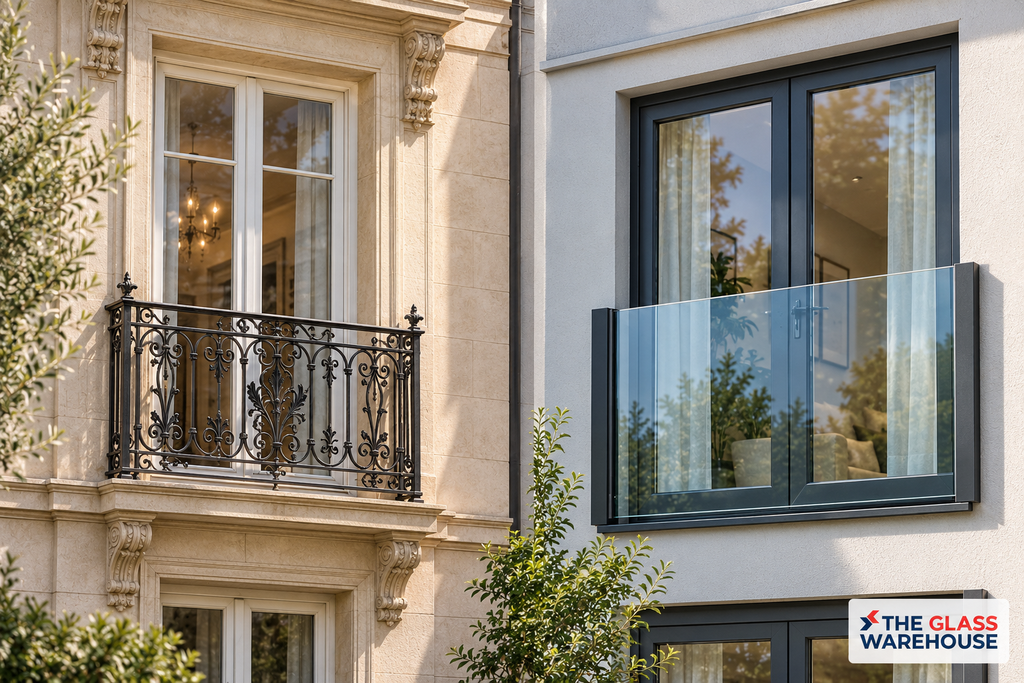
Similar barriers across tall windows and openings have long featured in European architecture, with wrought iron and decorative metalwork becoming particularly recognisable features of buildings in countries such as France and Italy.
For centuries, metal railings provided the obvious solution. Modern manufacturing has expanded the possibilities considerably, with safety glass allowing designers to create much less visually intrusive guarding.
The romantic name has survived; the materials, engineering, and regulations surrounding the product have moved on considerably.
Choosing the Right Glass, Whatever You Call It
Whether your plans, architect, or supplier describe the system as a Juliet balcony, balconette, or guarding, changing the name doesn’t change the safety requirements.
Where glass forms part of the barrier, the glass needs to be appropriately specified safety glazing for the complete system.
Toughened glass is heat-treated to provide increased strength and different breakage characteristics compared with ordinary annealed glass. Toughened laminated glass adds an interlayer designed to retain broken glass following failure, giving it different post-breakage characteristics.
Our guide to toughened vs laminated glass explains these differences in more detail and why the appropriate specification depends on the application.
BS 6180:2011 guides the design, structure, height, and strength of barriers in and about buildings. The glass, fixings, and supporting structure should therefore be considered together as a complete guarding system rather than specifying the glass in isolation.
Getting the Right System for Your Project
Ultimately, whether you call it a Juliet balcony, Juliette balcony, French balcony, balconette, or guarding, what matters is choosing a system correctly specified for your opening and project.
Once you’ve settled on the design, your next consideration may be budget. Our full Juliet balcony cost breakdown explains how glass specification, size, fixings, and installation can affect the overall price.
The Glass Warehouse supplies made-to-measure glass Juliet balcony systems for a range of standard and oversized openings, with different glass and fixing configurations available.
If you’re unsure which system is suitable for your project, contact the team for help with sizing and product selection.